
In the world of project management, ensuring that your resources are used effectively is crucial for delivering projects on time and within budget. One essential practice that helps achieve this is capacity planning.
As a project manager, I’ve seen firsthand how capacity planning can be the difference between a project that runs smoothly and one that faces delays and burnout. In this article, we’ll dive into what capacity planning is, how it can benefit your business, and how tools like TimePlanner can streamline your processes.
What is capacity planning?
Capacity planning is the process of determining the resources needed to meet project demands and ensuring that you have enough capacity to handle those demands. It involves forecasting resource requirements, assessing available capacity, and aligning both to ensure that projects are completed efficiently without under- or over-utilizing resources.
So, what is capacity planning in practical terms for a project manager? It’s about understanding how much work your team can handle at any given time. Additionally, you must ensure that there’s enough capacity to meet deadlines and prevent team members from becoming overwhelmed.
4 types of capacity planning
It isn’t a one-size-fits-all approach. There are several types of capacity planning strategies, each suited to different business needs.
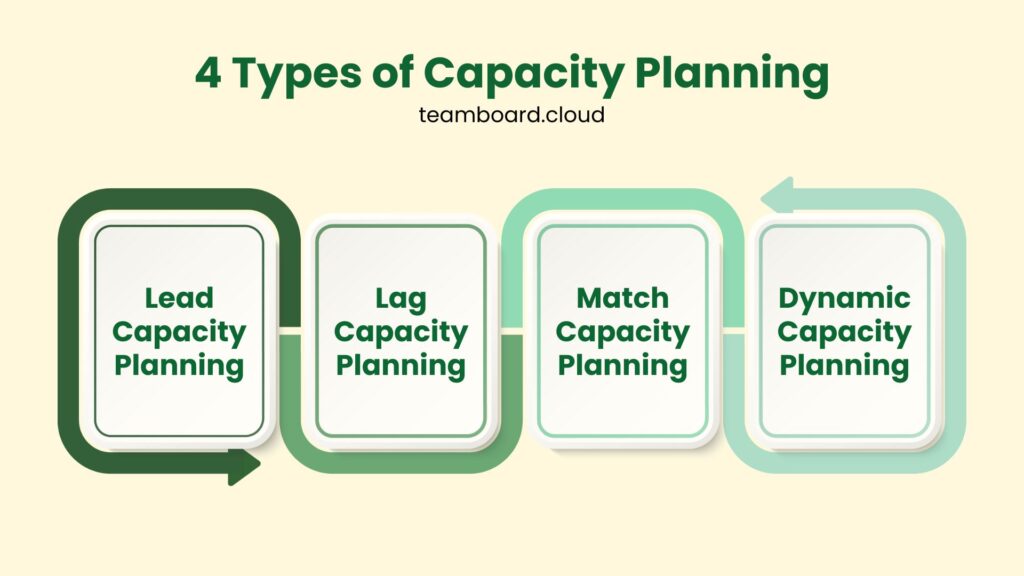
1. Lead capacity planning
Lead capacity planning is a proactive approach that involves forecasting future demand and increasing capacity in advance to meet that demand. This means that businesses prepare for peak periods or anticipated demand surges before they occur, ensuring that resources such as labor, equipment, and facilities are available when needed.
Additionally, Lead capacity planning works best for industries where demand is predictable and steady, such as seasonal businesses. For instance, retailers can use this method to prepare for peak shopping seasons like Black Friday or the holiday period, ensuring they have enough staff and inventory to meet customer needs.
The main advantage of lead capacity planning is to ensure businesses are prepared in advance, preventing bottlenecks during peak periods. However, the downside is that businesses may end up with wasted resources, leading to higher costs if demand doesn’t materialize as expected.
2. Lag capacity planning
In contrast to lead capacity planning, lag capacity planning involves waiting until demand exceeds current capacity before increasing resources. In this approach, businesses adjust their capacity only after experiencing a surge in demand. Besides, this method can prevent unnecessary resource investment, making it a more conservative and cost-effective approach.
Besides, lag capacity planning is particularly useful in industries where demand is highly unpredictable or cyclical. Startups or businesses in emerging markets often use this method to avoid over-committing to resources.
The main advantage of lag capacity planning is that it minimizes the risk of overcapacity and wasted resources. However, its biggest drawback is that it may cause delays in meeting customer demand since businesses are reacting after the demand has already increased.
3. Match capacity planning
Meanwhile, match capacity planning is a more balanced approach that focuses on adjusting capacity incrementally based on ongoing demand patterns. Rather than drastically increasing or decreasing capacity, businesses continuously monitor demand and make small adjustments to maintain a balance between supply and demand.
Additionally, this approach works well in environments where demand is somewhat predictable but still fluctuates over time, such as in service industries like consulting or software development.
The primary advantage of match capacity planning is that it allows businesses to respond to demand in a balanced way, ensuring that resources are used efficiently without overburdening staff. However, it requires regular monitoring and flexibility, which can be resource-intensive for businesses with rapidly changing demand.
4. Dynamic capacity planning
Dynamic capacity planning is the most flexible of all the methods. It relies on real-time data to adjust capacity continuously based on immediate changes in demand. Therefore, businesses using this approach can make on-the-fly adjustments, such as reallocating resources or hiring additional staff, in response to shifting demand.
This approach is ideal for industries with highly volatile or unpredictable demand, such as tech startups or the hospitality industry. For example, businesses experiencing sudden spikes in demand can quickly increase their capacity to handle the load, and conversely, reduce capacity when demand drops.
The biggest advantage of dynamic capacity planning is its agility, allowing businesses to adapt quickly to changing conditions. However, it requires sophisticated tools and technology to manage real-time adjustments. Besides, it can be more complex to implement compared to other methods.
How businesses benefit from capacity planning
Effective capacity planning has a direct impact on several key areas of business operations. Here’s how it benefits businesses:
- Optimized resource allocation: By assessing resource availability in advance, businesses can allocate resources to where they are needed most, ensuring that team members are not overburdened or under-utilized.
- Cost efficiency: Capacity planning helps businesses minimize unnecessary costs by ensuring that resources are used efficiently. It prevents situations where resources sit idle or become thinly stretched, leading to potential delays and missed opportunities.
- Improved customer satisfaction: With proper capacity planning, businesses are better equipped to meet customer demands on time, ensuring timely delivery and maintaining customer trust.
- Scalability: Businesses that engage in proper planning are more easily able to scale their operations. As demand grows, they can ensure they have the necessary resources in place to handle that growth without disrupting operations.
- Risk management: Effective capacity planning helps mitigate the risks of overextending resources or facing capacity shortages, both of which can disrupt operations and damage a company’s reputation.
Capacity Planning vs. Resource Planning
At this point, it’s important to understand the difference between capacity planning and resource planning in project management. These terms are often used interchangeably but serve distinct purposes.
- What is capacity planning? It focuses on determining the overall ability of an organization to meet its demands. Moreover, it ensures that there is enough capacity (e.g., workforce, machinery, etc.) to handle projected work volumes.
- Resource planning, on the other hand, is more specific. It involves assigning and managing individual resources (people, equipment, etc.) to tasks in a way that maximizes efficiency and prevents conflicts or bottlenecks.
While both are essential for effective project management, capacity planning provides a broader strategic framework that sets the stage for detailed resource planning.
The advantages
Capacity planning offers several key advantages for businesses. Especially for project managers, they are the ones who need to keep everything running smoothly:
- Efficient operations: By ensuring that there’s always enough capacity to meet demand, businesses can maintain steady operations without overloading teams or under-utilizing resources.
- Reduced downtime: Capacity planning allows businesses to proactively identify potential bottlenecks and avoid them, leading to minimized downtime and continuous productivity.
- Better decision-making: With a clear understanding of capacity, businesses can make more informed decisions about resource allocation, project timelines, and budget management.
- Flexibility and adaptability: Businesses can adjust quickly to changing demands, whether it’s scaling up or scaling down resources based on real-time data.
The drawbacks
While capacity planning provides many benefits, it does come with some challenges:
- Initial setup cost: Setting up a capacity planning system can be resource-intensive, requiring significant time and financial investment upfront.
- Inaccuracy of forecasts: Capacity planning relies on accurate demand forecasts. If predictions are off, it can lead to misaligned resources and inefficiencies.
- Complexity in dynamic environments: Industries with fluctuating demands may find capacity planning difficult to implement effectively as rapid changes in demand can make forecasts less reliable.
- Over or Under-estimation: Finding the right balance can be tricky. Underestimating capacity can lead to overburdened teams, while overestimating can result in wasted resources.
How capacity planning tools streamline your processes
To avoid the pitfalls of manual planning, many project managers turn to capacity planning tools to help streamline their processes. These tools automate much of the work involved, making it easier to manage resources and forecast demand.
Here’s how they help:
- Automation and efficiency: Tools like TimePlanner automate the process of tracking and adjusting capacity, saving time and reducing the chance of human error.
- Real-time data integration: These tools pull in real-time data, allowing businesses to adjust capacity dynamically based on current demand and available resources.
- Forecasting and scenario planning: With these tools, businesses can easily forecast demand and test different scenarios to ensure they have the right amount of capacity in place for any situation.
- Resource optimization: Capacity planning tools help businesses track resource usage and make adjustments as needed while distributing workloads evenly across teams.
TimePlanner – Your perfect solution
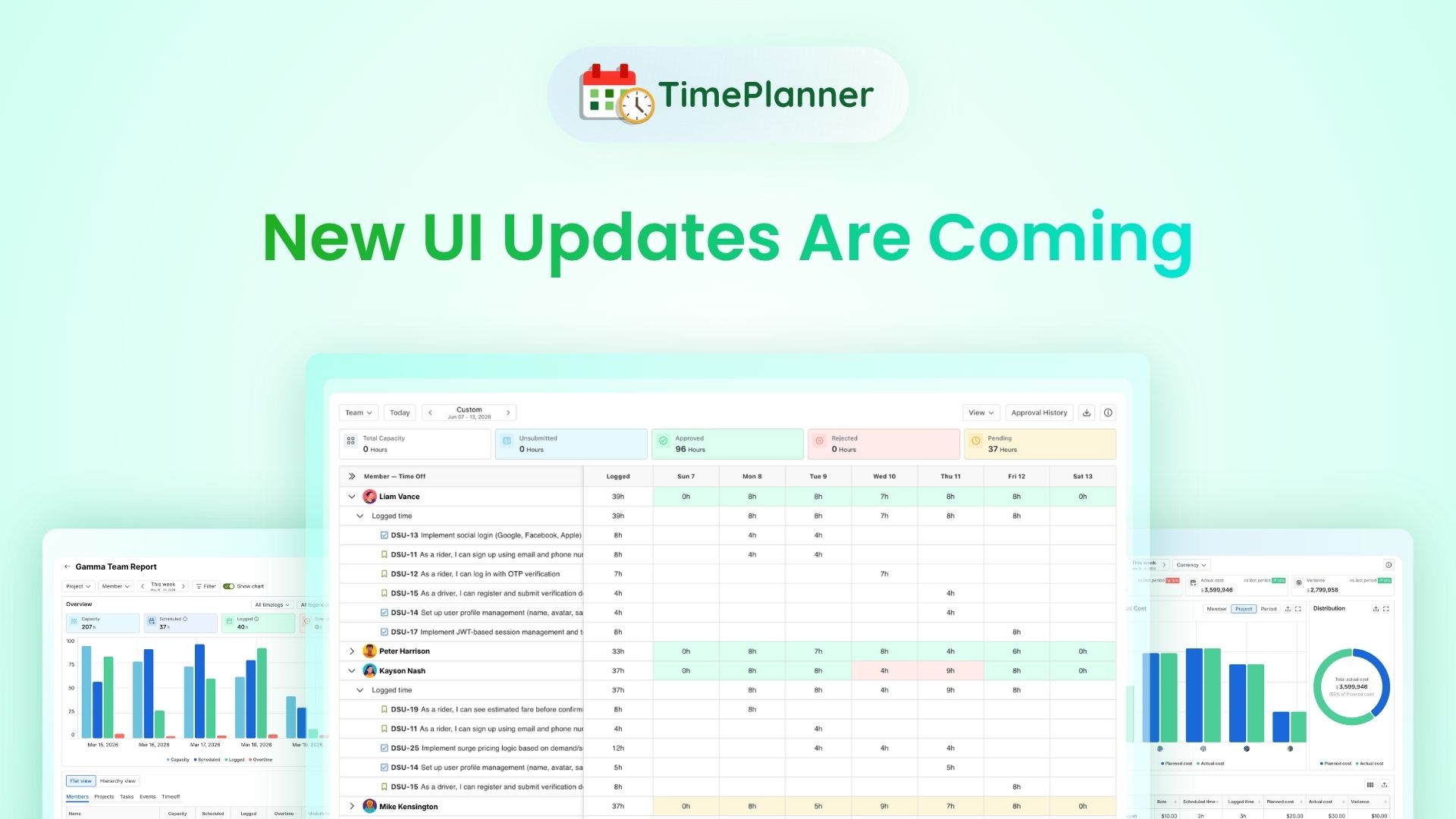
When it comes to choosing the right tool, TimePlanner has become a comprehensive solution to streamline the entire process. It provides powerful features, including demand forecasting, resource tracking, and scenario analysis. With these capabilities, the app can help project managers make informed, data-driven decisions.
- Avoiding overload and burnout: TimePlanner ensures that workloads are balanced across teams, preventing overburdening and reducing the risk of burnout. By tracking each team member’s availability and skill set, the tool allocates tasks based on capacity, making sure no one is overwhelmed.
- Optimized resource allocation: TimePlanner helps businesses allocate resources efficiently by providing a clear view of available capacity, ensuring resources are assigned to projects in a way that maximizes output and minimizes downtime.
Conclusion
So, what is capacity planning? It is a crucial practice for businesses and project managers, ensuring they can meet demand without overloading teams or wasting resources. By understanding different types and using the right tools, like TimePlanner, you can streamline your operations and improve decision-making. Besides, you and your team can work at an optimal pace—without the risk of burnout.
Effective capacity planning is not just about managing resources. It’s about creating an environment where both the business and its employees can thrive. If you haven’t already implemented capacity planning into your projects, now is the time to start!