

Task project management is the engine that drives successful projects. It involves breaking down complex goals into actionable tasks, assigning clear responsibilities, setting realistic deadlines, and tracking progress to ensure everything aligns with the project’s objectives. When task management is effective, teams stay coordinated, deadlines are met, and stakeholders are satisfied. But when it falters, small issues at the task level can escalate into major project roadblocks, threatening timelines, budgets, and team morale.
The key to avoiding these pitfalls is vigilance. By spotting early warning signs in task project management, project managers can take proactive steps to keep projects on track. In this blog, we’ll explore seven critical warning signs to watch for, why they matter, and how to address them. Each sign includes a specific insight to help you apply the advice to real-world scenarios.
Why Task Management Is Critical to Project Success
Task management is the foundation of any successful project, whether you’re launching a marketing campaign, developing software, or managing a construction project. It ensures every task contributes to the project’s goals and keeps the team moving in the same direction. However, even minor missteps like a delayed task or unclear assignment can create a domino effect, disrupting schedules and increasing costs.
By catching these issues early, project managers can prevent small problems from becoming major setbacks. Below, we outline seven task project management warning signs, their implications, actionable solutions, and insights to help you apply these lessons effectively.
7 Task Project Management Warning Signs to Watch For
1. Tasks Consistently Missing Deadlines
When tasks repeatedly miss deadlines, it’s a red flag that something’s wrong. Common causes include unrealistic time estimates, unclear task ownership, or competing priorities. For example, a team member might underestimate a task’s complexity or be stretched thin across multiple responsibilities.
Why It Matters
Chronic delays disrupt dependent tasks, push back milestones, and erode stakeholder confidence. Over time, these missed deadlines can inflate budgets and lower team morale.
What to Do
- Review task dependencies to ensure timelines are realistic.
- Adjust workloads to prevent team members from being overburdened.
- Revisit prioritization to focus on high-impact tasks.
- Hold regular check-ins to update estimates and catch delays early.
Insight
Missed deadlines often stem from overly optimistic planning. For instance, in a software development project, assuming a feature will take three days when it requires five due to testing can throw off the entire sprint. Always pad estimates with a buffer (e.g., 20% extra time) and validate them with the team to account for unforeseen complexities.
(Learn More: Project Deadline Management: 9 Steps to Always Deliver Projects on Time)
2. Frequent Task Reassignments
If tasks keep getting reassigned between team members, it signals unclear roles or mismatched capacity. This often happens when the initial assignee lacks the skills, time, or resources to complete the task, or when the project manager misjudges team availability.
Why It Matters
Constant reassignments disrupt momentum and create confusion. Team members may feel frustrated if they lose ownership or inherit unfamiliar tasks, leading to errors or disengagement.
What to Do
- Define clear roles and responsibilities during project planning.
- Use task management tools to document assignments and track progress.
- Communicate reasons for reassignments to maintain trust.
- Monitor team capacity to match tasks with availability and expertise.
Insight
Frequent reassignments can reveal a gap in skills mapping. For example, in a marketing project, reassigning content creation tasks because the initial assignee lacks SEO expertise wastes time. Conduct a skills audit before assigning tasks to ensure the right person is matched to the job, reducing churn and boosting efficiency.
3. Poor Task Visibility Across the Team
When team members don’t know who’s working on what, collaboration suffers. This often occurs when tasks are tracked in silos like individual spreadsheets or email threads rather than a centralized system, leading to a lack of transparency.
Why It Matters
Poor visibility causes duplicated efforts, missed deadlines, and accountability gaps. For instance, if a designer doesn’t know a developer’s task is delayed, they may pause their own work, slowing the entire project.
What to Do
- Adopt a centralized task management platform for real-time updates.
- Encourage team members to log task statuses regularly.
- Hold brief stand-up meetings to align on priorities and progress.
- Ensure everyone can see task assignments, deadlines, and updates.
Insight
Lack of visibility often hides small issues that grow silently. In a construction project, if subcontractors don’t know the status of material deliveries, they might delay their work, pushing back the schedule. A shared platform with daily updates can prevent these gaps, ensuring everyone stays on the same page.
4. Tasks Stalling in “In Progress” Status
Tasks lingering in “in progress” for too long indicate hidden blockers. These could be unclear requirements, resource shortages, or external dependencies, like waiting for client feedback or access to a tool.
Why It Matters
Stalled tasks create bottlenecks, delaying dependent work and disrupting schedules. They also sap team morale, as unfinished tasks feel like a constant burden.
What to Do
- Schedule regular check-ins to discuss task progress.
- Ask team members to flag blockers early, like missing resources or unclear instructions.
- Use project management tools to track task durations and spot delays.
- Promote transparent reporting to address issues before they escalate.
Insight
Stalled tasks often point to communication gaps. For example, in a product launch, a task like “finalize packaging design” might stall if the designer is waiting for brand guidelines. Setting up a clear escalation process (e.g., flagging issues within 24 hours) can prevent tasks from sitting idle and keep momentum going.
5. Overloaded Team Members
When the same team members handle most tasks, workload distribution is uneven. This often happens when managers rely heavily on top performers, leaving others underutilized.
Why It Matters
Overloaded team members risk burnout, leading to errors, missed deadlines, and potential turnover. Underutilized team members, meanwhile, may feel disengaged, weakening team cohesion.
What to Do
- Use task management tools to monitor workload across the team.
- Redistribute tasks to balance capacity and prevent burnout.
- Cross-train team members to build flexibility in assignments.
- Check in regularly to gauge stress levels and adjust as needed.
Insight
Overloading key players can create a single point of failure. In a project to redesign a website, relying on one developer for all coding tasks risks delays if they fall ill or burn out. Spreading tasks across the team, even if it means upskilling others, builds resilience and ensures no one person holds up progress.
6. Growing Backlog of Low-Priority Tasks
A growing backlog of low-priority tasks may seem minor but can become a problem over time. These tasks get sidelined for urgent work, piling up and cluttering the project pipeline.
Why It Matters
An unchecked backlog creates overwhelm and distracts from high-priority goals. Neglected tasks can become urgent, forcing the team to divert resources at the last minute.
What to Do
- Schedule regular backlog reviews to assess task relevance.
- Eliminate or delegate tasks that don’t align with project goals.
- Reprioritize backlog items based on impact and urgency.
- Use task management tools to categorize and track backlog tasks.
Insight
A bloated backlog often hides scope creep. In an event planning project, tasks like “research extra vendors” might pile up if not regularly pruned, draining focus from critical deliverables like securing the venue. Set a rule to review and cut 20% of backlog tasks monthly to keep the project lean and focused.
7. Lack of Alignment Between Tasks and Project Goals
When tasks don’t clearly support project objectives, teams waste time on irrelevant work. This can happen due to scope creep or assigning tasks without validating their purpose.
Why It Matters
Misaligned tasks drain resources and shift focus from key deliverables. This frustrates stakeholders and risks missing project milestones.
What to Do
- Reassess project scope to ensure tasks support outcomes.
- Involve stakeholders in planning to align on priorities.
- Map tasks to project goals using task management tools.
- Communicate how each task drives the project forward to boost engagement.
Insight
Misalignment often stems from vague project goals. In a software rollout, tasks like “create extra user guides” might seem useful but add little value if the core goal is rapid deployment. Regularly map tasks to a clear project charter to ensure every effort moves the needle toward the end goal.
How TaskFord Helps You Stay Proactive With Your Task Project Management
TaskFord is an Integrated Work Delivery Platform that helps project managers spot task management warning signs before they become bigger delivery problems.
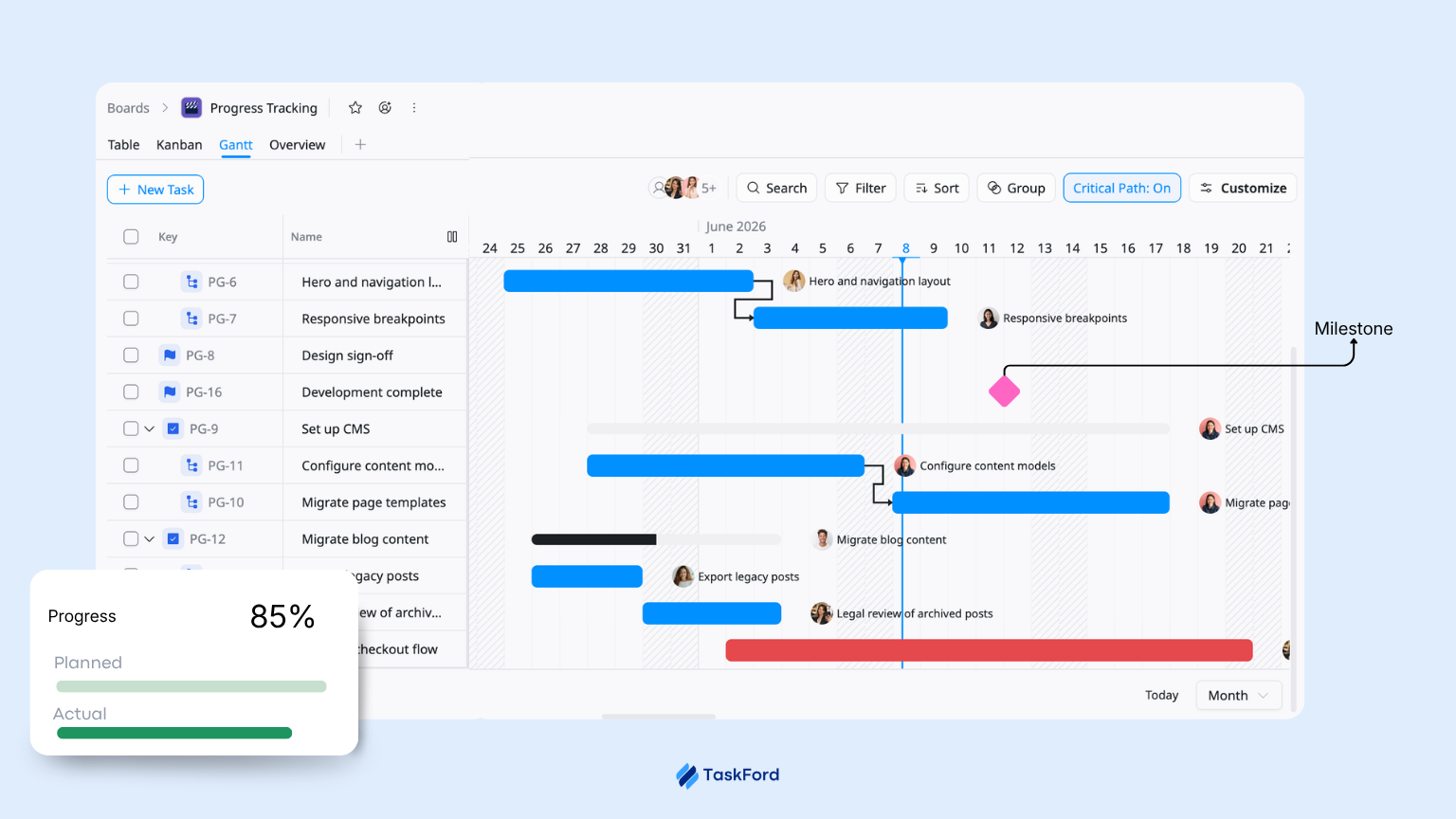
By bringing task management, workload planning, time tracking, Gantt charts, portfolio visibility, and reporting into one platform, TaskFord gives teams a clearer view of what is happening across projects.
With TaskFord, project managers can:
- Centralize tasks, owners, priorities, deadlines, and statuses
- Identify delayed or stalled tasks before they block progress
- Track workloads to prevent team members from becoming overloaded
- Use Gantt charts and timelines to manage dependencies and deadlines
- Track time and timesheets to understand where effort is being spent
- Monitor portfolio progress across multiple projects
- Use dashboards and reports to keep stakeholders aligned
The difference between reactive and proactive task management is visibility. TaskFord helps teams connect daily tasks with workloads, timelines, resources, and delivery outcomes, so project managers can act earlier and keep projects on track.
Conclusion: Take Control of Your Task Project Management
Task project management issues don’t appear overnight. They start as subtle signals like missed deadlines, stalled tasks, or misaligned priorities that grow into major setbacks if ignored. By monitoring these seven warning signs, project managers can stay proactive and prevent small problems from derailing big goals.
Start paying attention to these signals today. Equip your team with tools like TaskFord to centralize tasks, track progress, and maintain alignment with project objectives. With proactive task management, you can deliver projects on time, within budget, and with a happier, more engaged team.